Wondering what fruits are in season in summer? Think berries, cherries, peaches and watermelon, though the mix shifts by region. Here is what to look for at your market and how to choose it.
This page is part of our seasonal eating guide.
| Region | Summer fruit to look for |
|---|---|
| Northeast | Blueberries, cherries, strawberries (late season in northern areas) |
| Southeast | Peaches, watermelon |
| Midwest | Blueberries, raspberries, cherries |
| Pacific Northwest | Cherries, blueberries, raspberries |
| Berry storage | Refrigerator crisper: 2-3 days |
The regional lists come from the Farmers’ Almanac regional produce guide, updated August 19, 2026. The berry storage time comes from University of Maryland Extension. Harvest timing changes with weather, so check the sources and your local market before you rely on these figures.
The short answer: berries, stone fruit and melons
Common summer fruits include berries, stone fruit and melons. Berries, cherries, peaches and watermelon have overlapping seasons that vary by region.
Which of these you find depends on where you live. A fruit that peaks in one region may be just starting, or already finished, in another.
- Berries: blueberries, raspberries, strawberries
- Stone fruit: cherries and peaches
- Melons: watermelon
Cantaloupe and honeydew belong to the melon family too, and University of Maryland Extension groups them with watermelon for storage. Ask your local growers what they have picked that week, because lists like these are a starting point, not a promise.
What to look for by region
In the Northeast, the Almanac’s guide points to blueberries, cherries and strawberries, with strawberries in their late season in northern areas. Farm stands there tend to be busy as summer gets going.
In the Southeast, the same guide lists peaches and watermelon alongside tomatoes, sweet corn and okra. Warm nights and long days drive that bounty.
The Midwest list includes blueberries, raspberries and cherries, and the guide mentions Michigan blueberries by name. For the Pacific Northwest, the guide lists cherries, blueberries and raspberries and describes a produce season spanning June through September.
Why buying in season is worth it
Fruit that ripens near you does not need a long trip to reach your basket. That often means it is picked riper and tastes better. It is also usually easier to find at a fair price when many growers have the same crop at once.
Seasonal buying also nudges you to vary what you eat through the year. You enjoy cherries while they last, then move on to the next crop. Our what vegetables are in season in fall page picks up where summer leaves off.
A few habits make a market trip go further:
- Go early for the best choice, or late for deals on ripe fruit.
- Taste a sample when the grower offers one.
- Buy only what you can eat in a few days, plus a little extra to preserve.
- Bring a sturdy bag so soft fruit does not get crushed.
Keep a loose eye on the calendar. The Pacific Northwest, for example, sees produce from June into September, so one region can offer a long run of choices.
How to choose good summer fruit
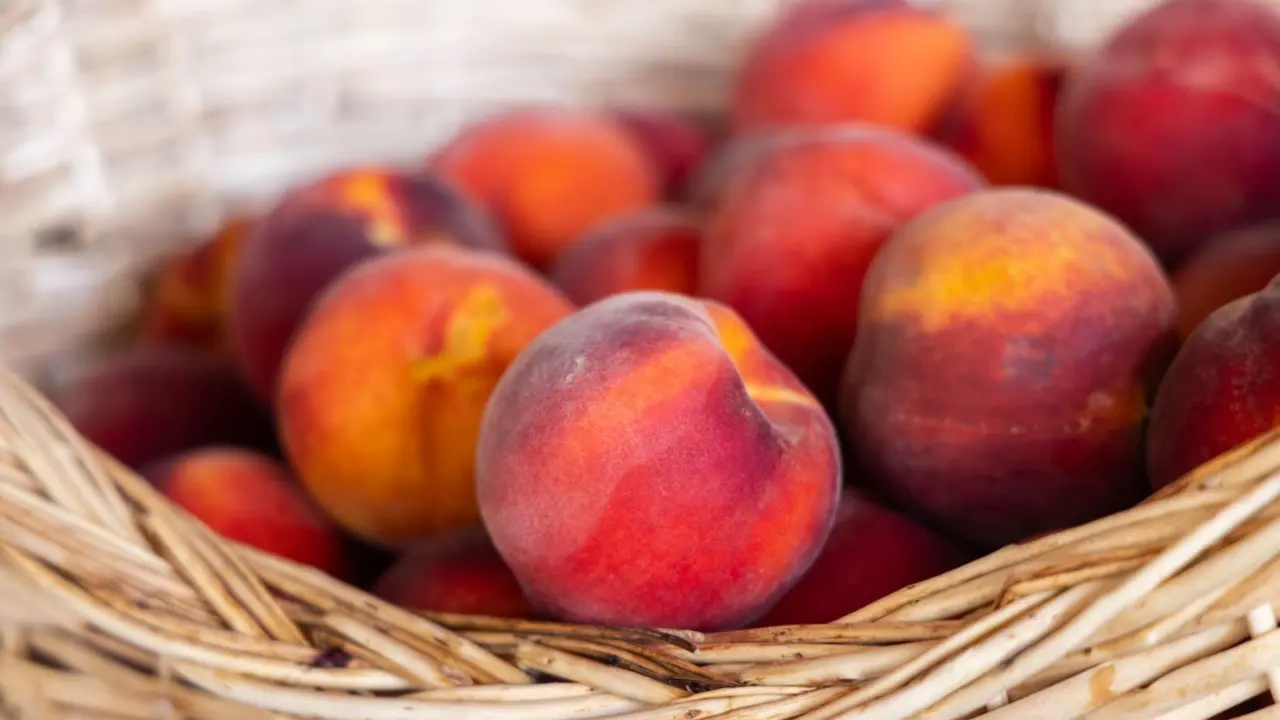
Your senses beat any label. Look for fruit that smells like itself, feels heavy for its size and has deep, even colour. A sweet aroma can help indicate a ripe peach.
- Smell the stem end of peaches; a sweet aroma suggests ripeness.
- Check berry containers for crushed or damp spots at the bottom.
- Pick watermelon that feels heavy and has a dull, not shiny, rind.
- Choose cherries with fresh green stems and glossy skin.
Ask the grower when the fruit was picked. Most farmers are glad to tell you, and to let you taste.
Ripeness matters more than looks. A peach with a faint blush can still be sweet, while a perfectly coloured one picked too early may stay hard and dry. Press gently near the stem rather than squeezing the whole fruit, which leaves bruises that spoil quickly.
Plan your buying around when you will eat. Fruit for tonight can be soft and fragrant. Choose firmer peaches for later in the week and let them ripen at room temperature; refrigerate berries and cherries.
Watch for signs a berry box has been sitting too long. Mould on one berry spreads fast, and juice stains on the container mean some fruit has already broken down. A quick look at the bottom of the box takes seconds and saves you a disappointing snack.
Storing berries, peaches and melons
University of Maryland Extension lists berries, including blueberries, raspberries and strawberries, for the refrigerator crisper for 2-3 days. It also says to remove any spoiled or crushed berries before storing, and not to remove the green tops from strawberries. The Almanac adds that berries should not be washed until you are ready to eat them.
For peaches, the Maryland guide says to ripen the fruit at room temperature and then refrigerate it in plastic bags, for up to 5 days in the crisper. Uncut melons such as watermelon are stored at room temperature, and cut melon keeps 3-4 days in the refrigerator, covered.
Tomatoes are botanically a fruit too. The Almanac recommends room-temperature tomato storage to preserve eating quality. If you end up with a glut, our guide on how to can tomatoes at home shows how to save them.
Easy ways to use a summer haul
Simple preparation lets the fruit do the work. The Almanac suggests blending watermelon into a chilled agua fresca, which is a good way to use a large melon.
- Toss berries over yogurt or oatmeal.
- Grill peach halves and serve them with something creamy.
- Freeze extra blueberries on a tray, then bag them for winter.
- Pit cherries for salads or baking.
- Chop ripe peaches and berries together for a quick fruit salad.
Fruit that is slightly too soft for eating out of hand is still excellent blended into a drink or cooked down into a sauce. Nothing needs to go to waste if you plan for it.
Preserving is the other route. Jam, freezer fruit and quick refrigerator pickles all stretch a short season. If you try home preserving, follow a tested recipe from a trusted extension or food-safety source rather than improvising.
Cooking also suits fruit with uneven texture. A bruised peach makes a fine compote, and a handful of soft raspberries turns into a sauce for pancakes. Cutting away the damaged part first keeps the flavour clean.
Finally, think of summer fruit as a savoury ingredient too. Watermelon pairs with salty cheese, cherries go well with roast meats, and peaches suit a grilled salad. Trying a new pairing each week keeps the season interesting from the first berries to the last melon.
Frequently asked questions
Which fruits are in season in summer?
Show answer
Common picks include blueberries, raspberries, strawberries, cherries, peaches and watermelon, depending on your region.
Do all regions have the same summer fruit?
Show answer
No. The Almanac guide lists different fruit for the Northeast, Southeast, Midwest and Pacific Northwest, so local timing matters.
Should I wash berries when I get home?
Show answer
Wait. The Almanac advises storing berries in the refrigerator and not washing them until you are ready to eat them.
Are tomatoes a summer fruit?
Show answer
Botanically yes, and they are in season in summer in the Southeast list. Store them on the countertop rather than in the fridge.