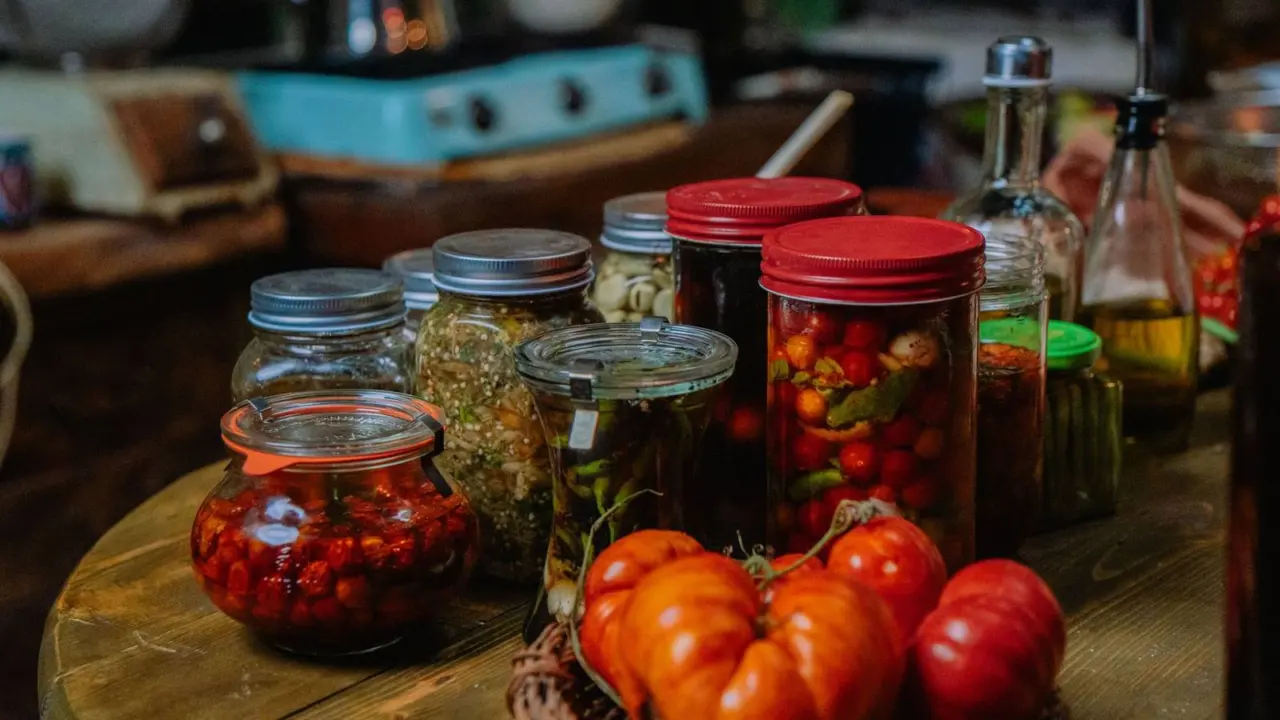
Staring at a crate of ripe market tomatoes and wondering how to can tomatoes at home? Wash, peel, crush, boil gently, add acid to each jar, fill hot, and process by a tested chart.
This guide is part of our seasonal eating guide.
| Item | Value |
|---|---|
| Bottled lemon juice per quart jar | 2 tablespoons |
| Citric acid per quart jar | ½ teaspoon |
| Headspace for crushed tomatoes | ½ inch |
| Skin-loosening dip in boiling water | 30 to 60 seconds |
| Gentle boil of crushed tomatoes | 5 minutes |
| Fresh tomatoes for one canner load of quarts | 22 pounds for 7 quarts |
These figures come from the National Center for Home Food Preservation crushed tomatoes page and its tomato blog post. Guidance can change, so check the source before you rely on them.
Why tomatoes need added acid
Tomatoes sit on the border between acid and low-acid foods. The National Center for Home Food Preservation explains that the USDA directions call for acidification so a less severe heat treatment is enough.
That means you cannot skip the acid, even if the tomatoes taste sharp. Sugar can soften an acid taste, but the acid itself cannot be reduced to suit your palate.
What you need before you start
Gather everything first, so jars never wait on the counter while you hunt for a lid.
- Ripe, firm, unblemished tomatoes. Plan on about 22 pounds for a canner load of 7 quarts, or about 14 pounds for 9 pints.
- Canning jars, new lids and bands.
- A boiling water canner with a rack, or a pressure canner if your chosen tested method uses one.
- Bottled lemon juice or citric acid.
- Optional salt: 1 teaspoon per quart, if desired.
Choose tomatoes at their peak. Our seasonal produce calendar shows when they reach the market, and the page on what fruits are in season in summer helps you plan the rest of the preserving season.
Step-by-step: crushed tomatoes
The steps below follow the National Center for Home Food Preservation method for crushed tomatoes with no added liquid.
- After washing, blanch the tomatoes for 30–60 seconds, stopping when their skins split.
- Cool the blanched tomatoes in cold water, then peel and core them.
- Quarter the trimmed tomatoes; rapidly heat and crush one-sixth in the pot, then gradually stir in the remaining quarters as the mixture boils, and boil gently for 5 minutes after all tomatoes have been added.
- Put the acid in each empty jar (amounts in the next section).
- Immediately pack the hot tomatoes into jars, keeping ½ inch of space below each rim.
- Wipe rims, adjust the lids and process.
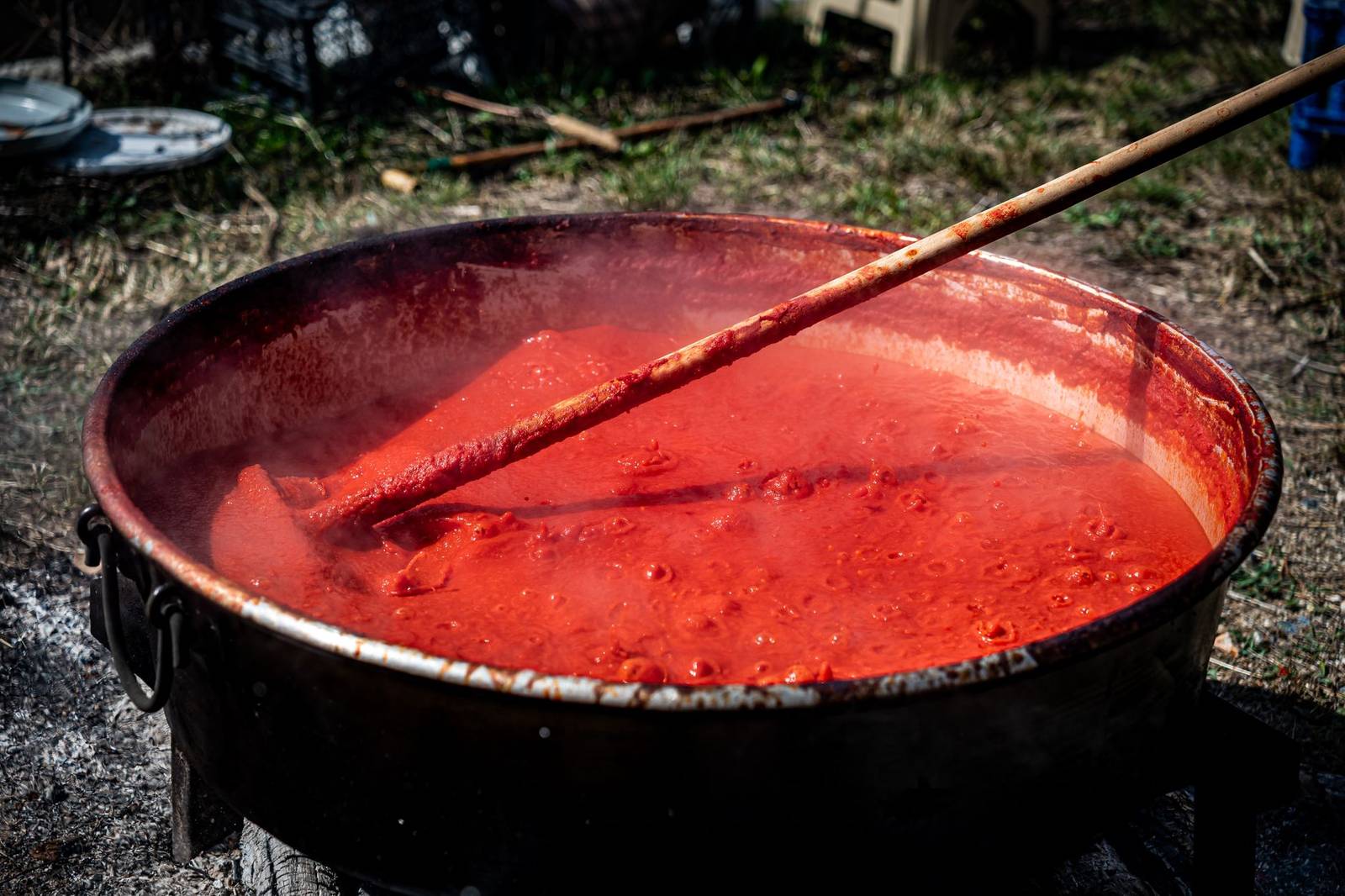
Processing times depend on jar size, canner type and your altitude. Take them from the tables on the source page, not from memory or an old family recipe.
How much acid goes in each jar?
The National Center for Home Food Preservation says to add two tablespoons of bottled lemon juice or ½ teaspoon of citric acid per quart of tomatoes. For pints, use one tablespoon of bottled lemon juice or ¼ teaspoon of citric acid, per the same blog post.
- Citric acid changes the taste less for most people.
- Four tablespoons of vinegar at 5 percent acidity per quart can replace either, though it may alter the flavour.
- Putting the acid directly into each jar before filling makes sure every jar gets it.
Use bottled lemon juice rather than fresh, because its acidity is standardised.
Buying and prepping tomatoes at the market
A good canning tomato is ripe, heavy for its size and free of mould or deep cracks. Follow the tested preparation regardless of tomato variety; reduce the tomatoes to a thicker sauce after opening the jars for cooking.
Talk to the growers at your market. Discounted tomatoes are suitable only if they are firm and disease-free; reject spoiled or overripe fruit.
Plan to can on the day you buy, or the day after.
Setting up your workspace
- Clear a large area of counter and lay out clean towels for hot jars.
- Keep one pot for the boiling-water dip and a bowl of cold water beside it.
- Have a separate bowl for peels and cores so the work surface stays clear.
- Wash jars, lids and bands in hot, soapy water, and keep jars hot until filling.
Work in small batches. A canner load can take a long time to peel, so process one pot of tomatoes while the next is being prepared rather than leaving peeled fruit sitting.
Filling jars and checking your work
When the tomatoes have boiled gently, move quickly. Put the acid in the empty jars first, ladle in the hot tomatoes and leave the headspace the method calls for, which is ½ inch for crushed tomatoes.
Run a clean plastic utensil down the inside of the jar to release trapped air bubbles, then top up if the level has dropped. Wipe the rim with a clean damp cloth, because any tomato residue can stop a lid from sealing.
- Place lids and bands, tightening bands only to fingertip-tight.
- Follow the source’s complete instructions for your chosen canner, including water level, when to start timing, and the required pressure for pressure canning.
- Remove jars to a towel and leave them undisturbed overnight.
- Check each lid the next day: it should be curved down and not flex when pressed.
Any jar that has not sealed should go in the fridge and be used soon, or be reprocessed following the tested guidance. Wash the sealed jars, label them with the date and store them somewhere cool and dark.
Using your canned tomatoes through the year
Crushed tomatoes are the most flexible jar you can make. They work as the base for pasta sauce, soups, stews, chilli and braises, and they cook down well when you want a thicker sauce.
Canning fits neatly into seasonal eating: you capture peak-season flavour when fruit is abundant and cheap, then enjoy it in winter when fresh tomatoes are pale and costly. Many people make a few jars each week through the season rather than one marathon day.
Common beginner mistakes
- Skipping the acid because the tomatoes taste tart.
- Overfilling jars, which leaves less than the ½-inch headspace.
- Using a recipe that has no tested processing time.
- Adding extra low-acid vegetables such as peppers or onions to a tomato recipe without a tested method for that mix.
When in doubt, follow a tested recipe exactly and read the canner instructions linked from the source page before you begin.
Frequently asked questions
Do I really need lemon juice or citric acid?
Show answer
Yes. The National Center for Home Food Preservation says acidification is still required, even with the pressure canning options.
Can I use fresh lemon juice?
Show answer
The guidance specifies bottled lemon juice. Its acidity is consistent, whereas fresh lemons vary.
How many tomatoes should I buy at the market?
Show answer
Buy more than the bare quantity, because cores, skins and bruised spots are trimmed away. Ask the grower for “canning” or seconds tomatoes, which are often cheaper.
Should I add salt?
Show answer
Salt is optional. The method allows 1 teaspoon per quart if you want it.