Not sure what to put in your basket when the market thins out? This winter produce list covers the roots, greens, squash and citrus worth buying, plus how to store them.
This guide sits inside our seasonal eating guide, which explains how to shop with the calendar.
| Item | Value |
|---|---|
| Fruits and veggies in the USDA SNAP-Ed winter guide | Over 25 |
| Date of that USDA SNAP-Ed bulletin | 01/19/2021 |
| Warm storage for sweet potatoes, squash and pumpkins | 55 to 60°F |
| Temperature range for most fresh produce | 32 to 55°F |
| Humidity range for most fresh produce | 80 to 95 percent |
| Apples: storage temperature and approximate life | 30-40°F, 1-12 months |
Figures come from a USDA SNAP-Ed bulletin and a University of Maine Cooperative Extension bulletin. They can change, so check the sources before you rely on them.
What is in season in winter?
USDA SNAP-Ed lists more than 25 winter produce options in its seasonal guide. What counts as in season depends on where you live, so treat any list as a starting point and let your local market correct it.
The same bulletin suggests a kale salad, roasted carrots and parsnips, a turnip mash, and oranges and pears for something sweet. That gives you a sense of the winter basics: hardy greens, roots and citrus.
Winter vegetables to put on your list
Cold-weather vegetables tend to be sturdy, which makes them forgiving to buy and cook. Here is a practical shortlist to carry to the market:
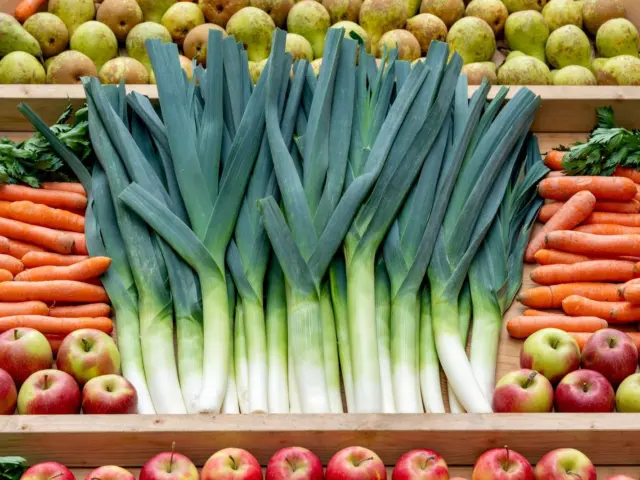
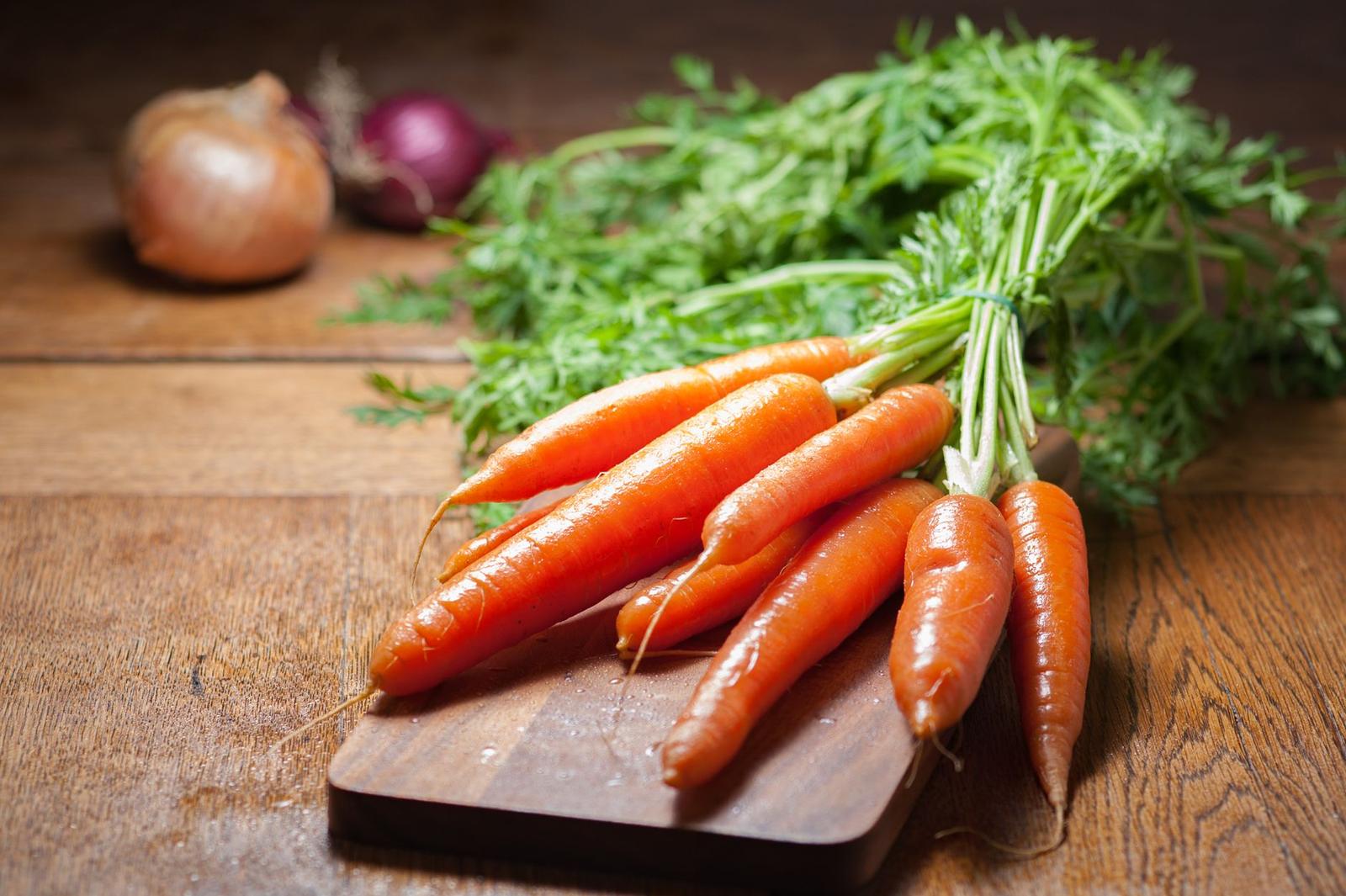
- Roots: carrots, parsnips, turnips, beets, celeriac and rutabaga. Roast them, mash them or put them in soups.
- Brassicas: cabbage, Brussels sprouts, cauliflower, broccoli and kohlrabi. They suit roasting, braising and slaws.
- Leafy greens: kale, collards, Swiss chard and escarole. Cook the tougher ones longer, and eat tender ones raw.
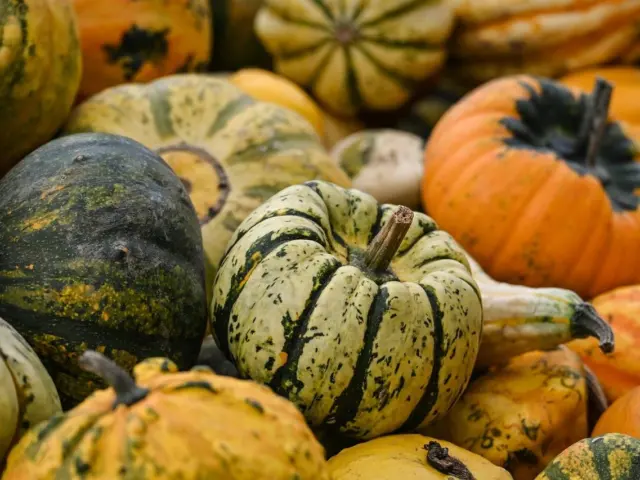
- Winter squash: butternut, acorn, delicata and kabocha. Whole squash keeps well, so it is a good bulk buy.
- Alliums: leeks, onions, shallots and garlic. They build the base of most winter dishes.
- Sweet potatoes and potatoes: filling and cheap, and good for batch cooking.
Availability changes from market to market. If a vendor has something that is not on this list, ask what it is and how they cook it.
Winter fruit worth buying
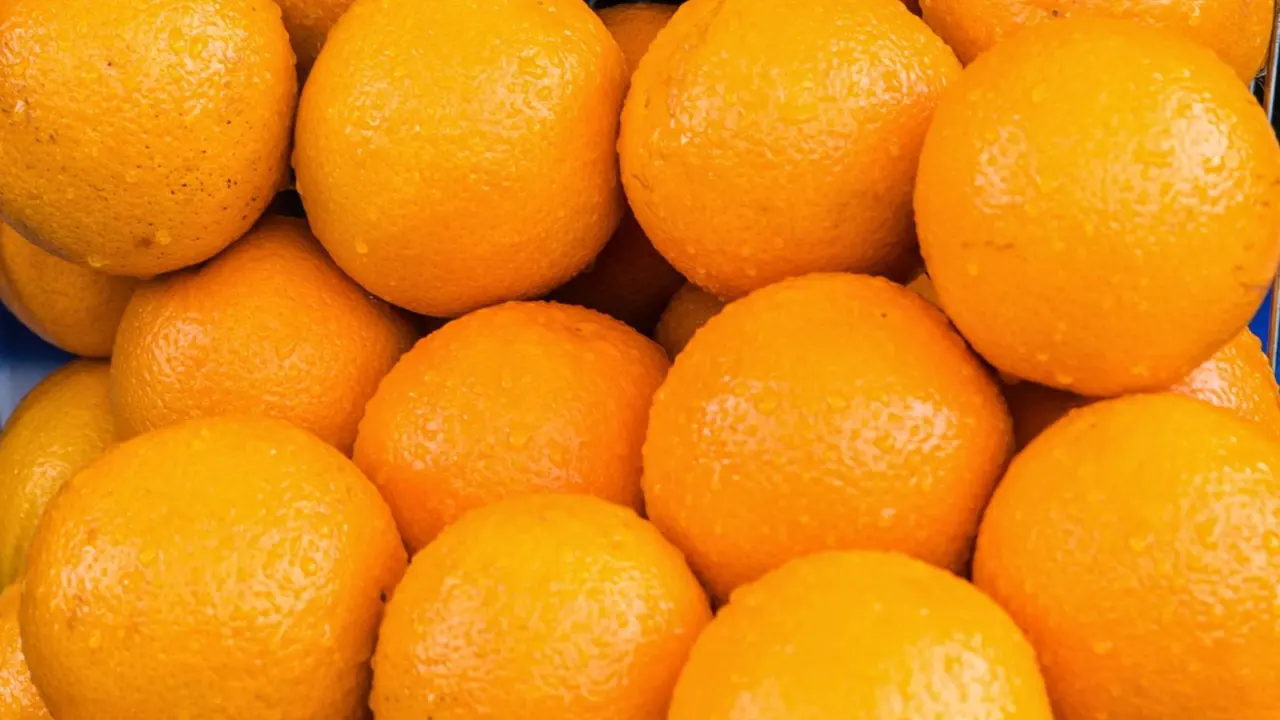
Citrus is the headline fruit of the season. Oranges, mandarins, grapefruit and lemons are all easy to find and carry well in a bag. Pears and apples that were stored after the autumn harvest are also widely sold.
Some markets also sell pomegranates or persimmons, depending on the region. If you want to see how the lists overlap, compare this one with what vegetables are in season in fall, since many roots and squash carry over between seasons.
How to choose good winter produce
Look for heft and firmness. Roots, squash and cabbages should feel heavy for their size, with no soft spots, mold or deep cuts.
- Pick greens with crisp, deeply colored leaves, not yellowed or slimy ones.
- Choose citrus with smooth, taut skin that feels heavy in the hand.
- If roots come with their tops, remove the tops at home so they do not pull moisture from the root.
- Buy whole squash and cabbage rather than pre-cut pieces if you want them to last.
Frozen produce can fill gaps when fresh options look tired. Compare prices and condition before you decide.
A simple winter shopping plan
A list is only useful if it turns into meals. Build your basket around a few flexible staples, then add one or two new items each visit so you do not get bored.
- Start with a base: onions, carrots, and a cabbage or two.
- Add a hearty green such as kale or chard for quick sautés and soups.
- Pick one squash or a few sweet potatoes for roasting and mashing.
- Choose one fruit for snacking, such as oranges or pears.
- Finish with one item you have not tried, like celeriac or kohlrabi.
Adjust quantities to your meal plans and compare prices to help manage waste and cost. This approach also nudges you toward variety without a long list to memorize.
Easy ways to cook the haul
Roasting is the simplest method for most winter vegetables, because high heat browns the edges and sweetens roots and squash. Toss pieces in oil, salt them, and spread them on a tray so they brown rather than steam.
Braising and soups suit tougher greens, cabbage and leeks. Slow cooking softens them and gives a rich flavor from little effort. A big pot of vegetable soup also uses up the odd bits left in the crisper drawer.
Raw preparations still have a place. Shredded cabbage, grated carrot or thinly sliced fennel make crunchy salads, and a squeeze of citrus brightens them.
How to store winter produce at home
The University of Maine bulletin recommends storage temperatures of 32 to 55°F and relative humidity of 80 to 95 percent for many crops, helping reduce moisture loss and respiration. Your fridge crisper drawer gets close to this for many items.
Some crops need warmer conditions. The same bulletin gives 55 to 60°F for sweet potatoes, squash, pumpkins or similar crops, so keep those in a cool pantry or cupboard rather than the fridge.
The bulletin lists apples at 30-40°F, with an approximate storage life of 1-12 months, depending on variety and condition. Keep the best-looking ones for later and eat any bruised fruit first.
- Sort your haul when you get home and use anything damaged first.
- Put roots, cabbage and greens in the fridge, loosely wrapped to hold humidity.
- Store squash and sweet potatoes in a cool, dry spot away from the fridge.
- Check stored produce regularly, use sound items that are losing firmness promptly, and discard anything showing signs of spoilage.
When spring approaches, your options change again. The spring vegetables list shows what comes next.
Making the most of the market
Winter markets are quieter, which is a good chance to talk to growers. Ask which crops came out of storage and which were picked recently, and ask for advice on storage and when to use them.
Go early in the day for the best choice, and bring sturdy bags for heavy roots and squash. If you buy in bulk, share with a neighbor so nothing goes soft before you can use it.
Finally, keep notes on what worked. After a season or two, you will have your own personal winter produce list matched to your market, your budget and your taste.
Frequently asked questions
What is the best winter produce to buy on a budget?
Show answer
Cabbage, carrots, onions, potatoes, sweet potatoes and winter squash are usually the sturdiest and keep well. Prices vary by region, so compare at your own market.
Can I eat summer produce in winter?
Show answer
Yes, but it is usually shipped from far away or grown under cover, so quality and price can vary. Frozen versions are a practical alternative.
Should I keep sweet potatoes and squash in the fridge?
Show answer
No. The University of Maine bulletin gives 55 to 60°F for sweet potatoes, squash and pumpkins, which is warmer than a fridge.
Does the winter list differ by region?
Show answer
Yes. Growing conditions and climate shift what is abundant, so use this list as a guide and check what your local vendors are selling.