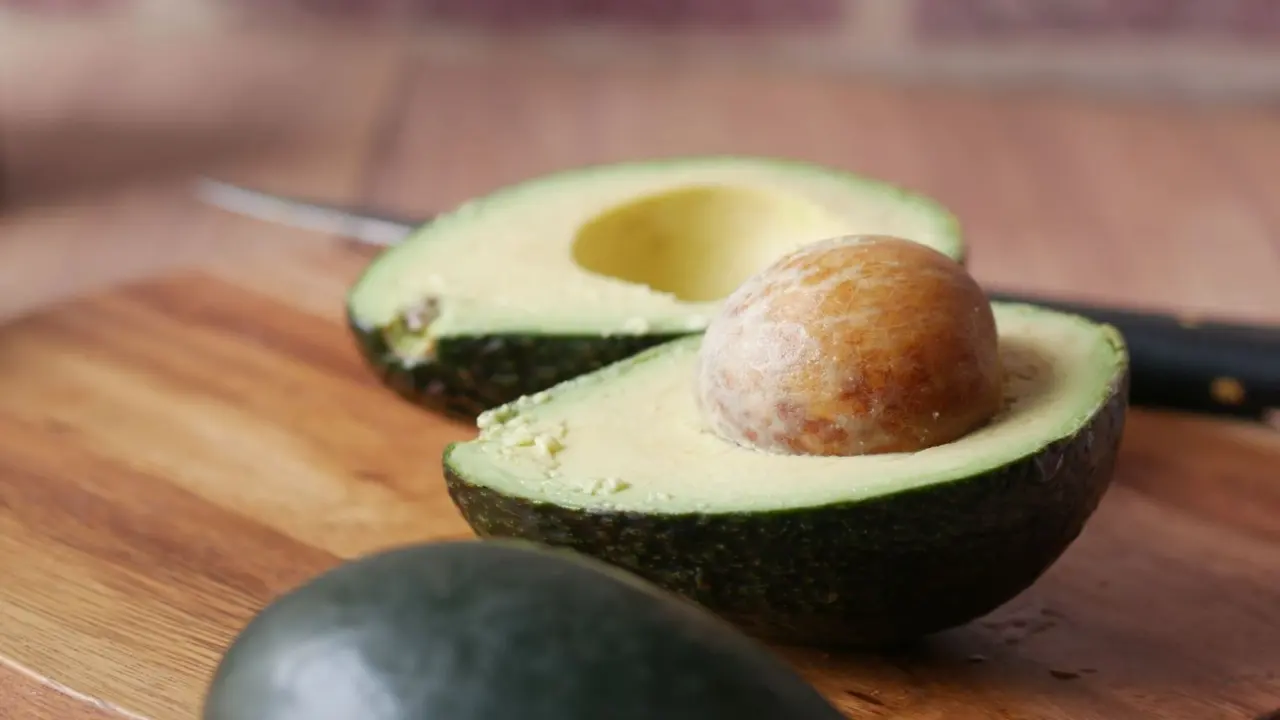
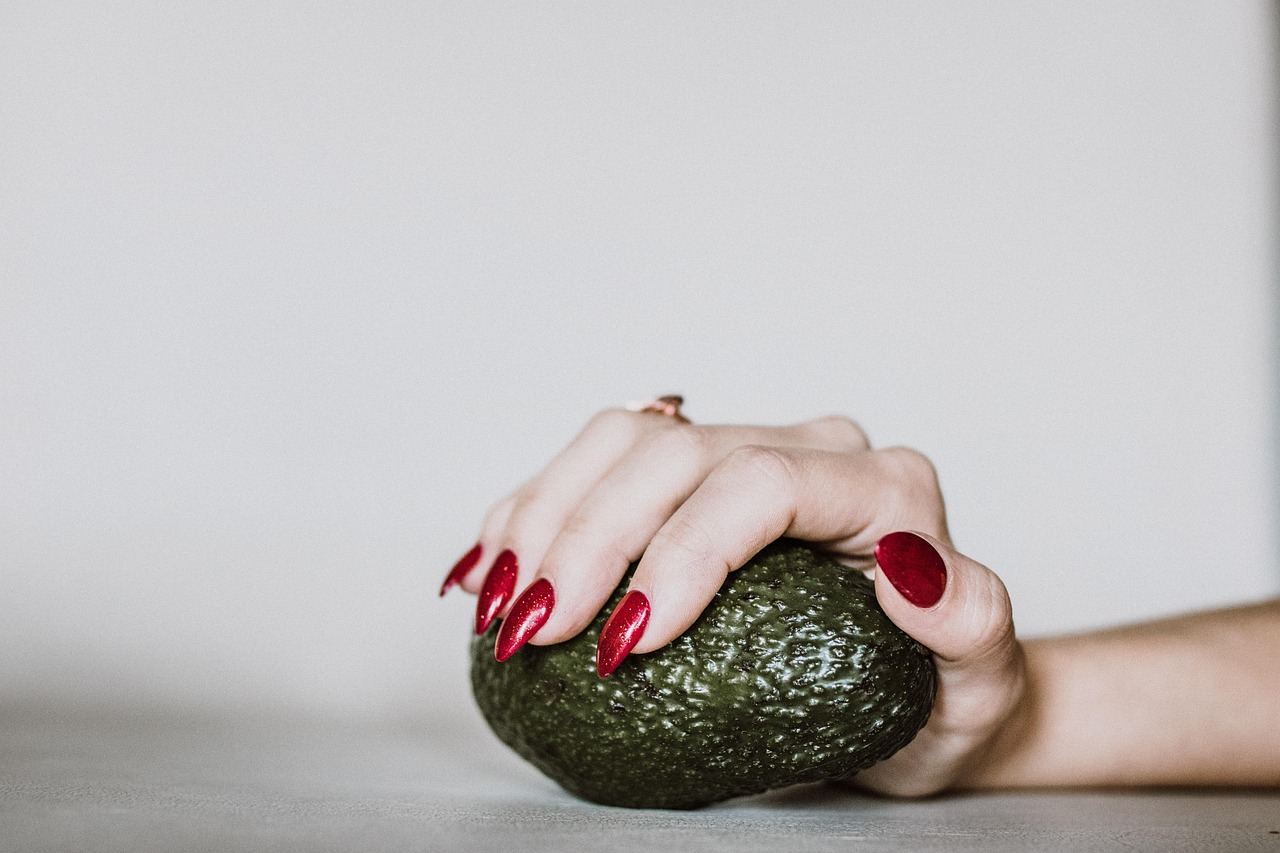
Standing at the pile with no idea which avocado is ready? Here is how to pick ripe avocados: cradle one in your palm and squeeze gently. Ripe fruit yields a little.
This guide is part of our fresh produce guide.
| Item | Value |
|---|---|
| Best ripeness test | Gentle squeeze in the palm of your hand |
| Ripe Hass skin colour | Dark green or black |
| Trade “pre-conditioned” stage | Ready in approximately 3 days at room temperature |
| Trade “breaking” stage | Ready in approximately 2 days at room temperature |
| Ripe fruit kept at room temperature | Stays in condition for 2-3 days |
| Ripe, uncut fruit in the refrigerator | Two or three days |
These figures come from the California Avocado Commission’s choosing guide and its stages-of-ripe sheet. They can change, so check the source before you rely on them.
Start with touch, not colour
The most dependable check is feel. The California Avocado Commission says the best way to tell if one of its avocados is ripe is “to gently squeeze the fruit in the palm of your hand.” Its description of the result is simple: ripe, ready-to-eat fruit “will be firm but will yield to gentle pressure.”
Use your whole palm rather than your fingertips. Fingertip pressure can bruise the fruit, so use a gentle palm squeeze.
Here is what the squeeze usually tells you:
- No give at all: the fruit is hard and needs time at home.
- Slight give: it is close, but not ready for guacamole yet.
- Gentle give all round: it is ready to eat.
- Mushy, or a dent that stays: it is past its best.
Can you trust the skin colour?
Only partly. The Commission notes that the Hass variety “will turn dark green or black as it ripens,” but that “some other avocado varieties retain their light-green skin even when ripe.” Colour is therefore a hint for Hass and a poor guide for green-skinned types.
Even with Hass, a dark skin does not prove the fruit is ready. Treat colour as a first filter to narrow the pile, then confirm with the palm squeeze.
How to pick ripe avocados from the display
Walk the display slowly and handle each piece the same way. A few quick checks save you from a bad pick.
- Look over the skin for blemishes. The Commission advises you to avoid “fruit with dark blemishes on the skin or oversoft fruit.”
- Press gently in more than one spot. Softness should be even, not a single mushy patch.
- Choose by your plans, not by the best-looking fruit. Firm fruit suits a meal later in the week; yielding fruit suits tonight.
The Commission suggests a simple strategy if you plan to serve avocados in a few days: stock up on hard, unripe fruit and let it ripen at home. Buying a mix of firm and yielding fruit gives you a staggered supply and avoids a pile of avocados ripening on the same afternoon.
How ripe is ripe? The trade’s stages
Wholesalers use named stages when ordering fruit. The Commission’s ordering sheet for Hass avocados is a handy map of what you may find at a market stall, and it shows how long each stage takes to reach eating condition.
| Stage | Description | At room temperature |
|---|---|---|
| Firm | Very hard fruit | Not ready yet |
| Pre-conditioned | Still firm | Ready in approximately 3 days |
| Breaking | Slight give | Ready in approximately 2 days |
| Firm ripe | Yields to gentle pressure | Fully ripe next day |
| Ripe | Easily yields to gentle pressure | Stays in this condition for 2-3 days |
The stage names and timings above come from the Commission’s stages-of-ripe sheet. Treat them as a guide, since your fruit and your kitchen will differ, and check the source before you rely on them.
The practical lesson is timing. Fruit that gives slightly is a day or two from perfect, while fruit that gives easily has a short window, so plan your meal around it.
Mistakes that lead to a bad avocado
Most disappointments come from a handful of habits. Each one is easy to fix once you know it.
- Judging by colour alone. A dark Hass can still be firm, and a green-skinned variety can be ripe. Always add the palm squeeze.
- Squeezing with the fingertips. Pressing hard on one spot leaves a mark. Use the whole palm and a light touch.
- Buying only ripe fruit for the week. Fruit that yields easily has a short window, so buy only as much ripe fruit as you expect to use within a few days.
- Ignoring blemishes. Dark marks on the skin and oversoft fruit are the two things the Commission says to avoid.
- Refrigerating hard fruit. The refrigerator advice from the Commission applies to ripe, uncut avocados, so keep hard ones on the counter.
If you are shopping at a busy stall, take a moment to handle the fruit the way you would at home. A few seconds with each piece beats cutting into a disappointing one later, and the stallholder will usually appreciate that you are handling fruit carefully rather than pressing every avocado in the pile.
Ripening and storing at home
If your avocados are hard, leave them on the counter and check daily with the palm squeeze. To speed things up, the Commission recommends putting them with other fruit, noting that “the more apples or kiwi fruit you add, the quicker your avocados will ripen.” Its rule for readiness is the same as in the shop: “When the avocados yield to gentle pressure, they are ready.”
A simple routine helps you avoid surprises. Set the fruit where you will see it, press it gently each morning, and note which ones are close. When one yields, use it that day or move it to the refrigerator, and leave the rest to carry on softening.
It also helps to match the fruit to the dish. Slightly firm fruit holds its shape for slices on toast or in salads, while fruit that yields easily is better mashed. Over-soft fruit, which the Commission advises you to avoid when buying, is best left behind at the shop.
Once the fruit is ripe, slow it down. The Commission says “ripe avocados can be stored in the refrigerator uncut for two or three days.” That gives you a short buffer if your plans change.
Keep in mind that the same care applies to other produce you bring home. If you are comparing what to buy, our notes on organic vs conventional produce cover another common market decision, and if herbs are also in your basket, see how to store fresh herbs for a different storage routine.
Frequently asked questions
Should I squeeze avocados with my fingertips?
Show answer
No. The Commission’s method is a gentle squeeze in the palm of your hand. Fingertips can bruise the flesh under the skin.
Does a black skin mean the avocado is ripe?
Show answer
Not always. A Hass turns dark green or black as it ripens, according to the California Avocado Commission, but other varieties stay light green even when ripe. Confirm with a gentle squeeze.
How do I ripen avocados faster?
Show answer
Keep them at room temperature with other fruit. The Commission says adding more apples or kiwi fruit makes avocados ripen quicker, and that they are ready when they yield to gentle pressure.
Is it better to buy hard avocados?
Show answer
Hard avocados suit plans several days away; choose the ripeness stage to match when you intend to eat them. The Commission suggests stocking up on hard, unripe fruit when you plan to serve avocados in a few days, then ripening them at home.
How long does a ripe avocado last in the refrigerator?
Show answer
The Commission recommends refrigerating whole, ripe avocados for two to three days. Use them within that window for the best texture.