Standing at the mango pile and unsure which to buy? Here is how to select ripe mangoes: press gently for a slight give, sniff the stem end for a fruity scent, and don’t trust color alone.
This guide belongs to our fresh produce guide, which covers buying fruit and vegetables at the market.
| Check | What to look for |
|---|---|
| Squeeze | A slight give, like an avocado or peach |
| Aroma | Sometimes a fruity aroma on the stem |
| Outside color | Not a good indicator of ripeness |
| Red blush | Not an indicator of ripeness |
| Hard, unripe fruit | Ripens over a few days in a paper bag at room temperature |
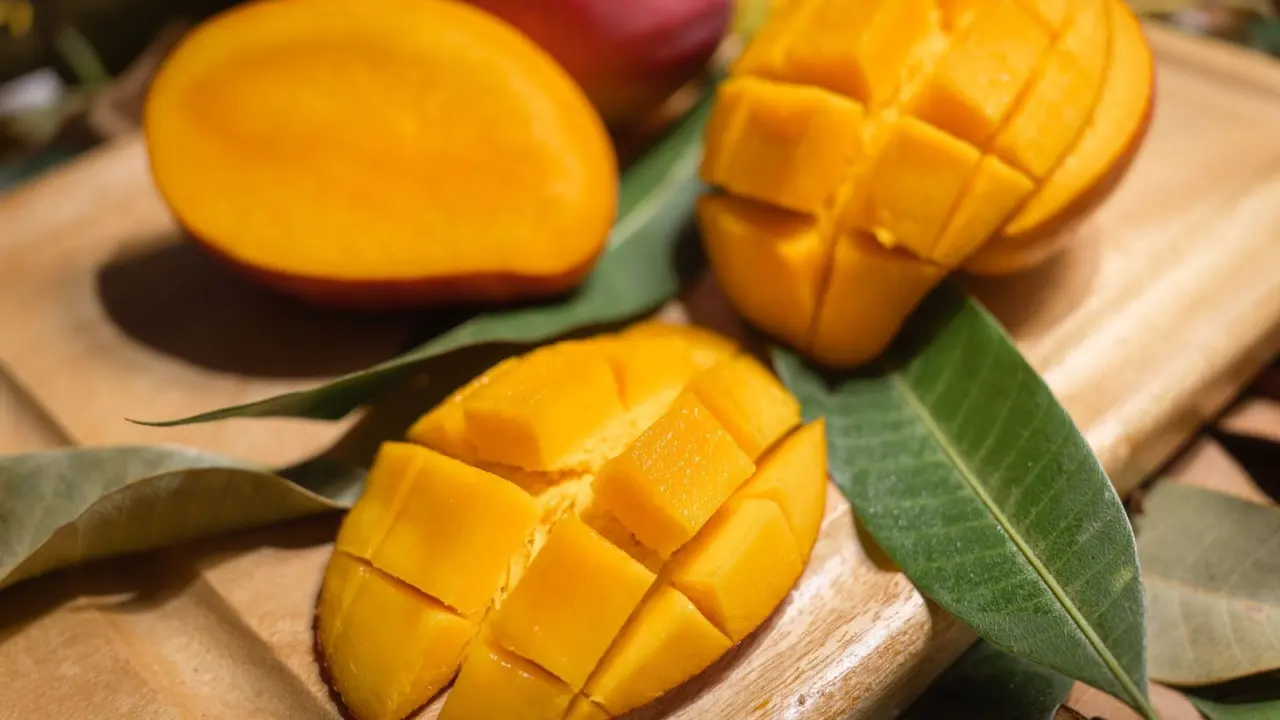
| Flesh when cut | Bright yellow or sunny gold |
These points come from the National Mango Board’s guide to choosing a ripe mango. Guidance can change, so check the source before you rely on it.
How to select ripe mangoes: start with the gentle squeeze
Start with a gentle squeeze: a ripe mango should have a slight give. Pick the mango up and hold it in your palm, then squeeze lightly with the whole hand rather than poking with a fingertip.
The National Mango Board says that when you pick mangos up and give them a gentle squeeze, a ripe one will have “a slight give – sort of like an avocado or peach!” If you already know how an avocado feels when it is ready, you have the right reference.
Use these rough stages as you handle the fruit:
- Rock hard: unripe. It can still be used, but it needs time at home.
- Slight give: ripe and ready to eat, or close to it.
- Very soft, mushy or leaking: past its best. Skip fruit that is mushy or leaking.
Press with a flat palm. Avoid pressing hard when checking for a slight give.
Use your nose at the stem end
Smell is a useful second check, but it is not foolproof. FreshFruitPortal’s report on the Board’s advice notes that some ripe mangoes smell fruity near the stem.
Lift the fruit to your nose and sniff where the stem attaches. A sweet, fruity, slightly tropical scent suggests ripeness. No smell does not always mean unripe, so lean on the squeeze test when the aroma is faint.
A sharp, sour or fermented smell is a warning. It usually means the fruit is overripe or starting to spoil, so put it back.
Why color alone can mislead you
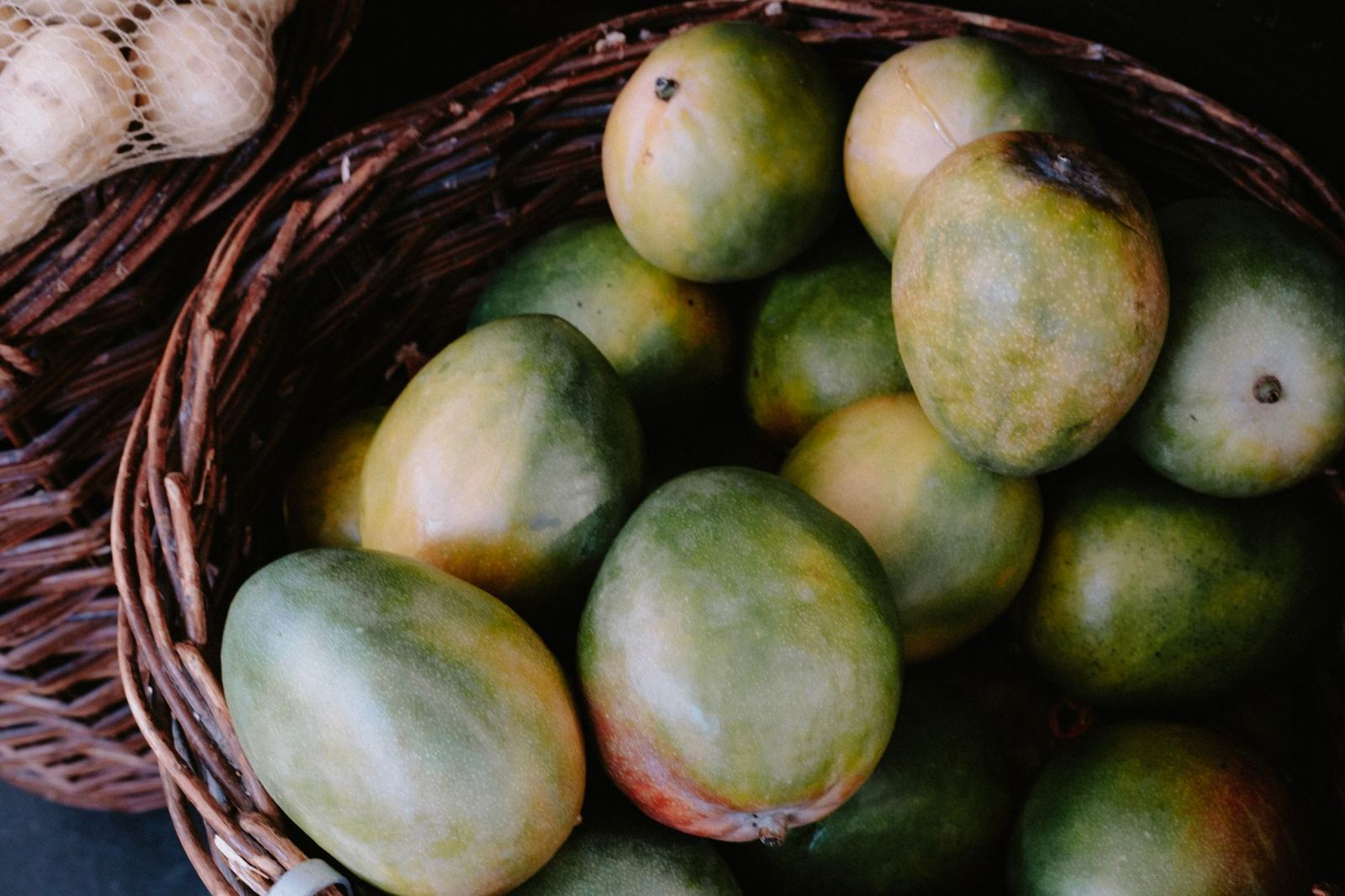
Do not choose a mango by its red blush alone. The Board’s guidance is that when choosing a mango, “don’t focus on color – it’s not the best indicator of ripeness.”
Mangos come in many varieties with different colors, shapes and sizes. Some stay green when ripe, while others turn yellow, orange or red. The red blush on some varieties is not an indicator of ripeness either, according to the same report.
Color becomes useful only when you know the variety well. If you buy the same type every week, you will learn what ripe looks like for that fruit, but even then, confirm with a squeeze.
What to do with an unripe mango
A hard mango is not a bad buy if you are not eating it today. Buying slightly firm fruit can even be smart when you want mangos for later in the week, since ripe ones need eating sooner.
The Board says that if you end up with a hard, unripe mango, you can keep ripening it at home. To help a hard mango ripen, keep it at room temperature inside a paper bag; this may take several days.
A simple routine works well:
- Place the mango in a paper bag and fold the top loosely.
- Leave it on the counter, out of direct sun.
- Check it daily with the gentle squeeze and a sniff at the stem.
- Eat it, or move it to the fridge, once it gives slightly.
Ripening speeds differ between fruit, so check each mango separately rather than assuming a batch will be ready together. Storage rules vary by fruit: tomatoes, for example, have their own rules, which we cover in how to store tomatoes.
Checking the inside and caring for ripe fruit
You cannot see inside at the market, but you can confirm your choice at home. The Board describes ripe mango flesh as yellow to gold.
If the flesh is still firm, allow other uncut mangoes more time to ripen. Give the next one more time on the counter.
Once a mango is ripe and you cannot eat it right away, a cooler spot helps it hold. Leafy produce has quite different needs, as explained in how to keep lettuce fresh longer, so do not treat all fresh produce alike.
Reading the whole fruit, not one clue
No single sign settles the question, so treat each check as one vote. A mango that gives slightly and smells fruity at the stem is likely ripe. One that is firm, scentless and very bright may simply need a few days.
Handle the fruit gently throughout. Market mangos are picked over all day, and repeated squeezing by many hands leaves soft marks. Try to make your decision with one careful press, and put back the ones you reject without dropping them.
Finally, ask the seller when the fruit arrived or whether any are ready to eat today. Market sellers handle the stock daily and can often point you to the ripest ones, or to firmer fruit for later.
A quick market routine
Put it together and the whole check takes a few seconds per fruit:
- Skip any fruit with deep dents, broken skin, weeping spots or a sour smell.
- Squeeze gently with your palm and look for a slight give.
- Sniff the stem end for a fruity scent.
- Ignore the red blush and pick by feel, not color alone.
- If you want to eat soon, buy a ripe one. If not, buy firmer fruit and ripen it in a paper bag.
Choosing a couple at different stages is a handy trick, since you get one for today and one for later. That way you are never forced to eat every mango at once, and none sits on the counter until it goes soft.
Frequently asked questions
Is a green mango unripe?
Show answer
Not necessarily. Color is not the best indicator of ripeness, so judge by a gentle squeeze and the aroma at the stem.
Does a red blush mean the mango is ripe?
Show answer
No. The National Mango Board’s advice, as reported by FreshFruitPortal, is that the red color on some varieties is not an indicator of ripeness.
How do I ripen a hard mango at home?
Show answer
Put it in a paper bag at room temperature. It will continue to soften and ripen over a few days.
What should the inside of a ripe mango look like?
Show answer
Expect yellow to gold flesh when the fruit is ripe, according to the Board.